
Before the Table
Part I - Recipes Written for Someone Who Already Knew

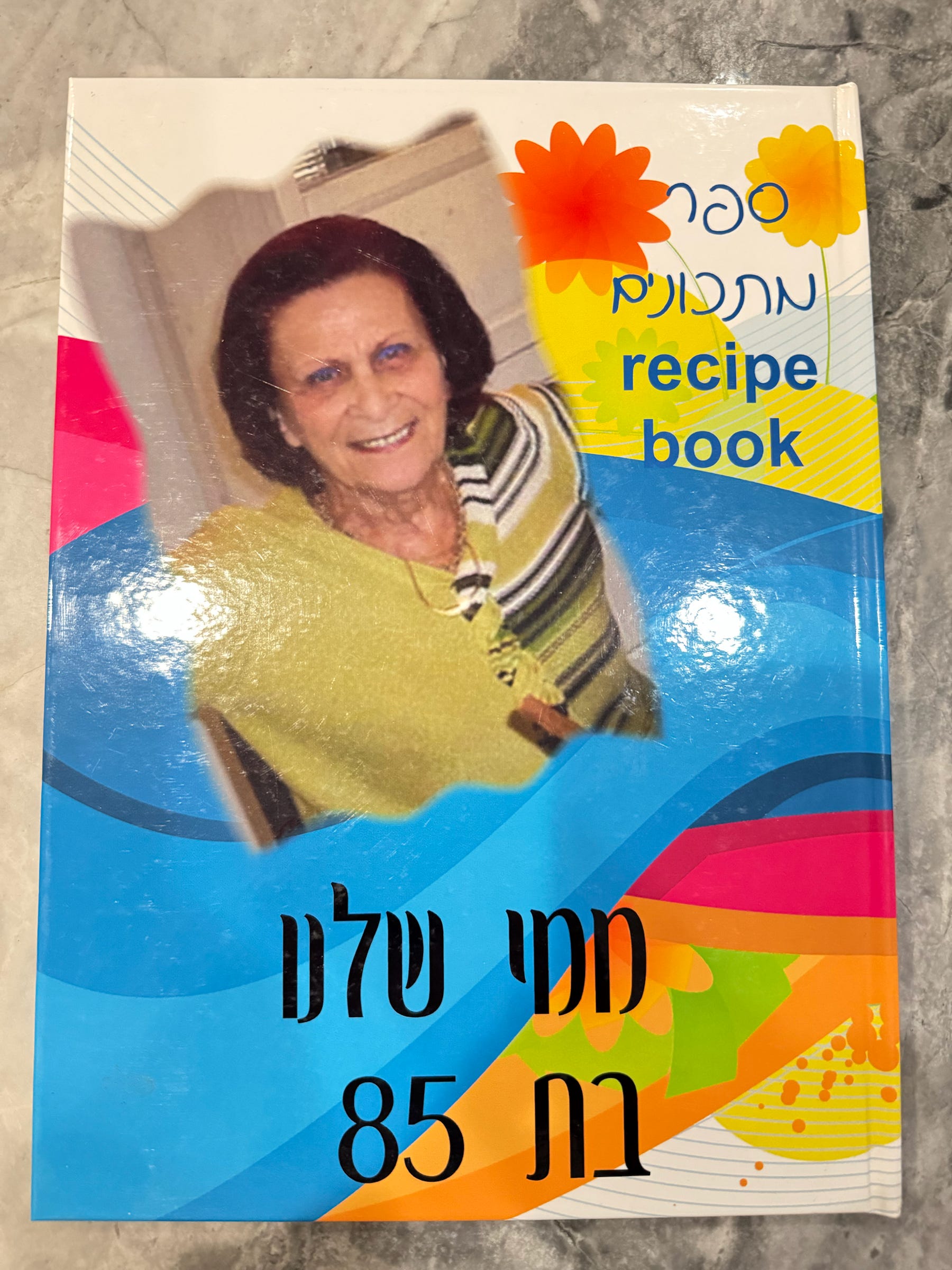
The book was made in Microsoft Publisher. You can tell. That does not make it less of a book.
Bright cover. Clip art flowers. Swirling colors - blue, yellow, orange, green. Her photo is on the front, and underneath it in Hebrew: our Mami, 85 years old. It looks like something made with love and limited graphic design skills, which is exactly what it is.
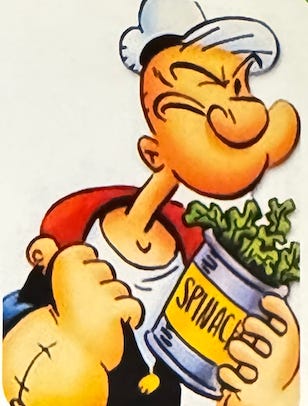
Inside, every page has its own theme: round cartoon fish clipart on the fish pages, butterflies on the baking pages, and Popeye holding a can of spinach on the vegetable pages.
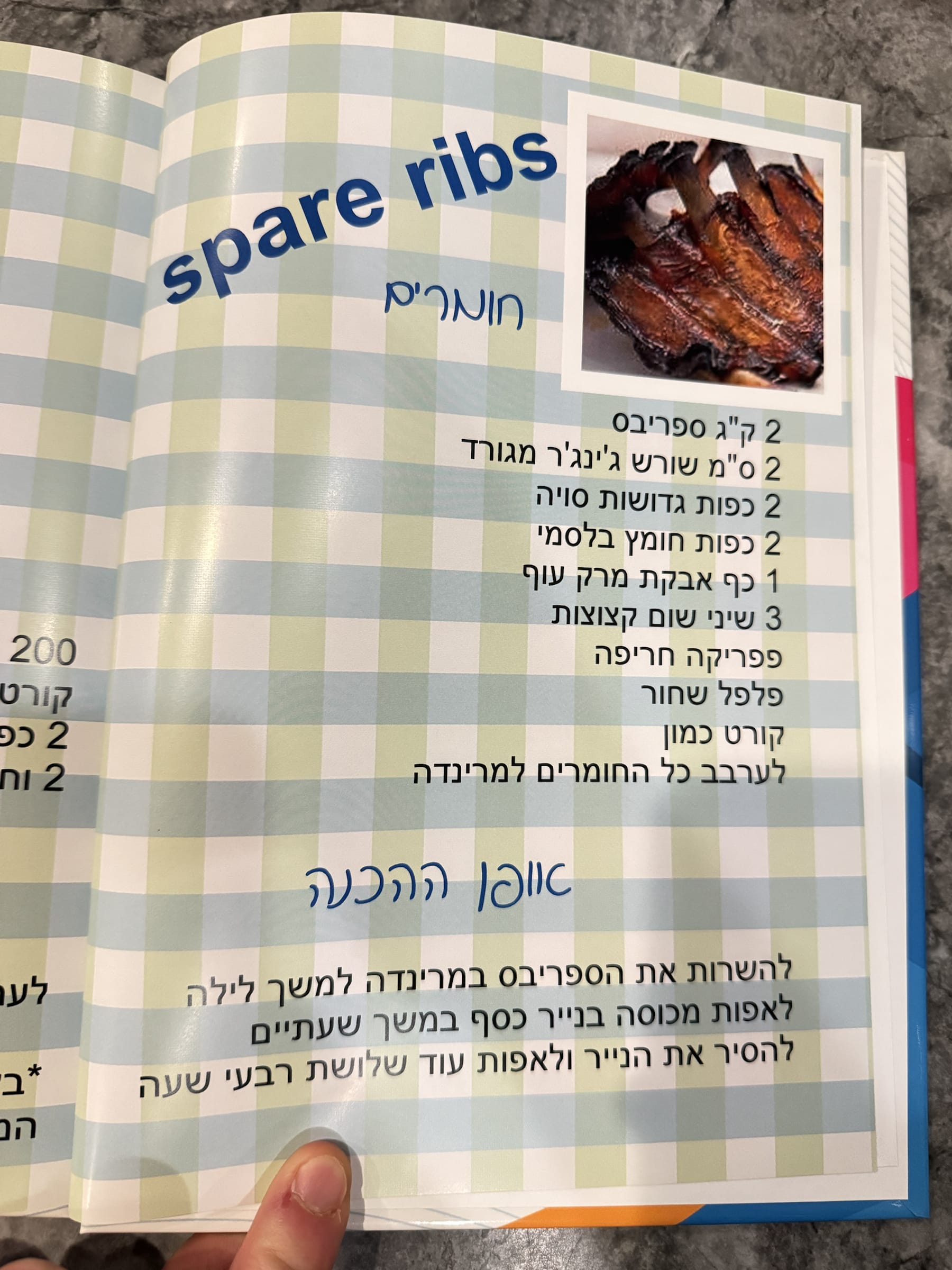
Some recipes are titled in Hebrew. Others in English. Shepherd’s pie. Spare ribs. Right there, in Roman letters. The spare ribs page has a small photograph of the actual ribs alongside the recipe.
It was a compilation of the things the family loved and asked her to write down. Sixteen recipes.
The dedication reads: “If we had tried to gather them all, you would have received this booklet from us on your 120th birthday.”
Her name was Ines Abarbanel. My Safta.
She was born in Turkey and came to Israel.
Her father was Balkan, her mother Turkish. Her father had a grocery store near Levinsky market in south Tel Aviv. The kind of store where he’d cut her chunks of halva and kashkaval straight off the wheel.
At Tu Bishvat he’d arrive with his pockets full of dried fruit. Ines grew up knowing that food was something you gave people, specifically, by hand.
Orange and Almond Cones
2 cups ground almonds
3/4 cup sugar
Zest of 1 orange
1 egg
1 cup petit beurre crumbs
Put everything in a pot. Cook on low flame. Create cones and put in the fridge
Even in that little recipe you can feel the assumptions. No real instructions, just the outline. Enough for someone who already knew.
She already knew how to be between worlds before she married Oded.
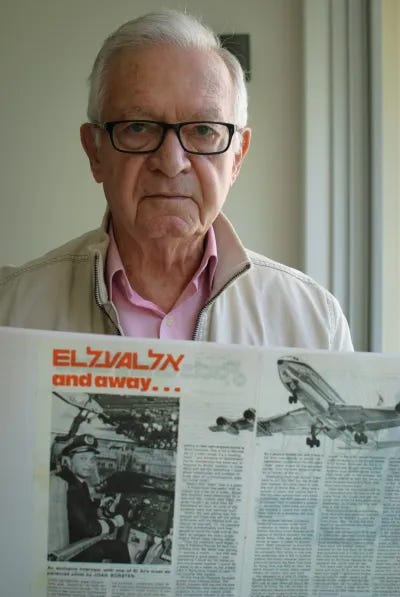
Oded flew for El Al for forty-six and a half years. He was persnickety about food. He had opinions. He’d eaten in every city with a runway…London, New York, São Paulo… and he came home knowing exactly what he liked.
He also came home carrying it. Lychees and pineapple from South Africa, the best cheese from France, salami from America that nobody in Israel knew what to do with and that wasn’t kosher.
This was a country of three million people with almost no food variety. He was arriving with ingredients that didn’t exist there yet.
She cooked to keep up.
That’s the shepherd’s pie. That’s the spare ribs. A woman who spent half a century receiving whatever a pilot brought through the door and making it into a meal.
Shepherd’s Pie
The original, translated from her Hebrew
3/4 kg mixed minced beef and lamb
3-4 boiled potatoes
1 large onion
3 eggs
1 tablespoon chicken stock powder
Paprika, cumin, black pepper to taste
Pie dough
Grease a rectangular pan. Flatten half the dough. Bake for 10 minutes. Fry the onion, minced meat with the spices and stock. Cook the potatoes and mash them into the minced meat. Add eggs. Mix and pour the mixture over the baked dough. Cover with the other half of the dough and brush with egg. Bake until dough is browned.
The range of her kitchen wasn’t eclectic. It was love.
A specific arrangement: you go everywhere, I’ll learn to cook everything.
He wrote a memoir, eventually. Mostly about flying. In the middle of it - one line about her cooking. He’d been held hostage in Algeria for forty days. When he finally came home, she made lunch.
He wrote: “Ines prepared all the dishes which I loved best.”
That was the whole sentence.
One line about a lifetime of cooking.
Her daughter Debbie (Daphna Shimron Abarbanel) became a food journalist who spent her career flying the world rating restaurants. She wrote a long piece about her mother’s kitchen. The published piece shows Ines and Debbie sitting at a table together, green beans between them, cooking.
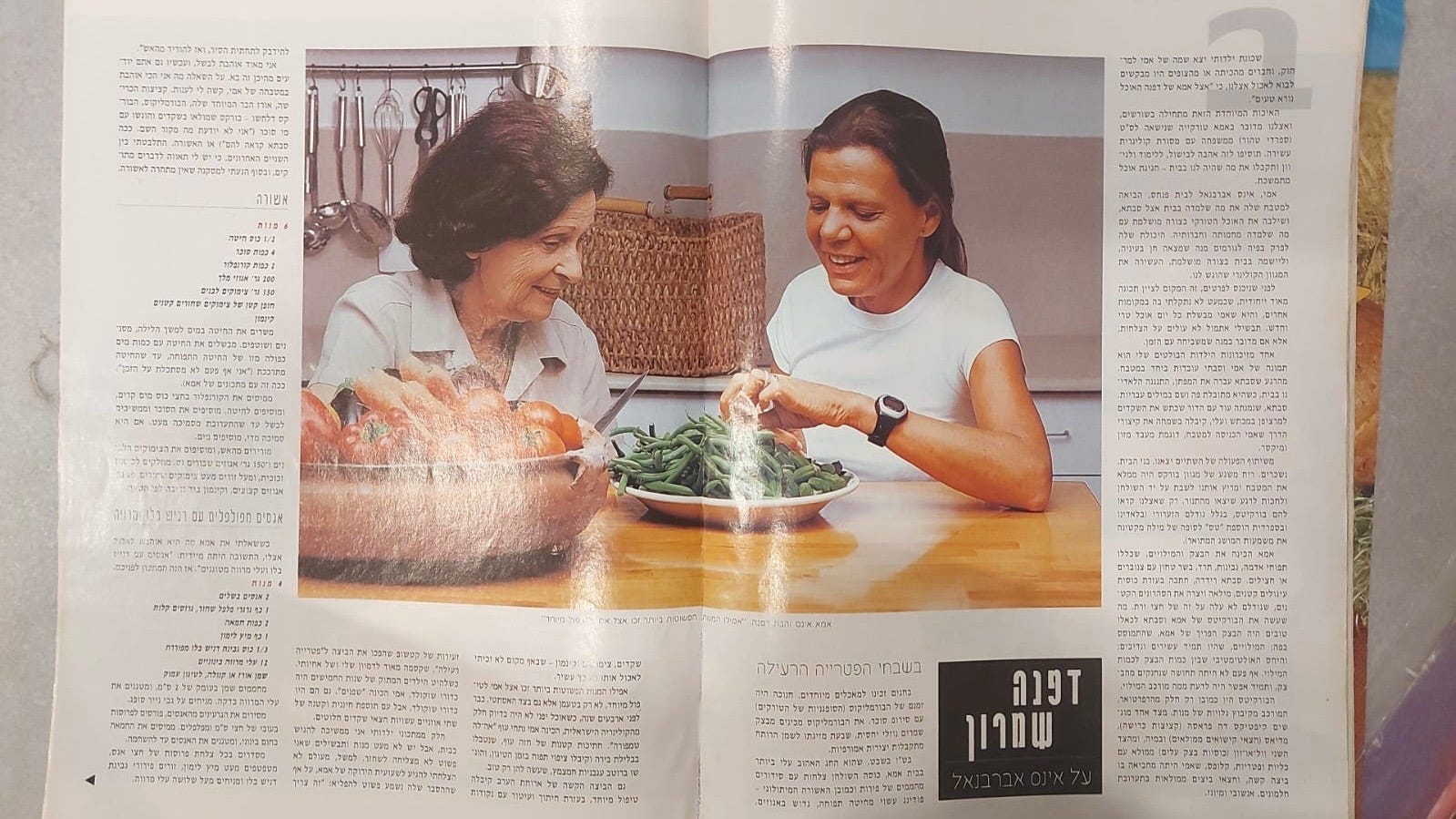
That’s the record Ines left: a cookbook full of instructions that assumed you already knew, one sentence in a pilot’s memoir, and a daughter who understood it well enough to write it down in articles that mostly never made it into the digital age.
Debbie’s Lemon Cake
Dough:
100 g butter
1/3 cup sugar
1 cup flour
Melt in a pot (bain-marie): 6 egg yolks + 3 Tbsp sugar. Add 1/2 cup lemon juice. Take off the flame.
In 1/2 cup boiling water dissolve 1 packet gelatin (14 g). Cool slightly and add to the above.
Whisk 6 egg whites and add 3 Tbsp sugar. Combine with the yolk mixture. Spread everything on the dough.
Whisk heavy whipping cream with 1 tsp sugar. Spread on top of the lemon mixture.
Debbie wrote recipes more clearly than her mother did, but not so clearly that they lost the family resemblance.
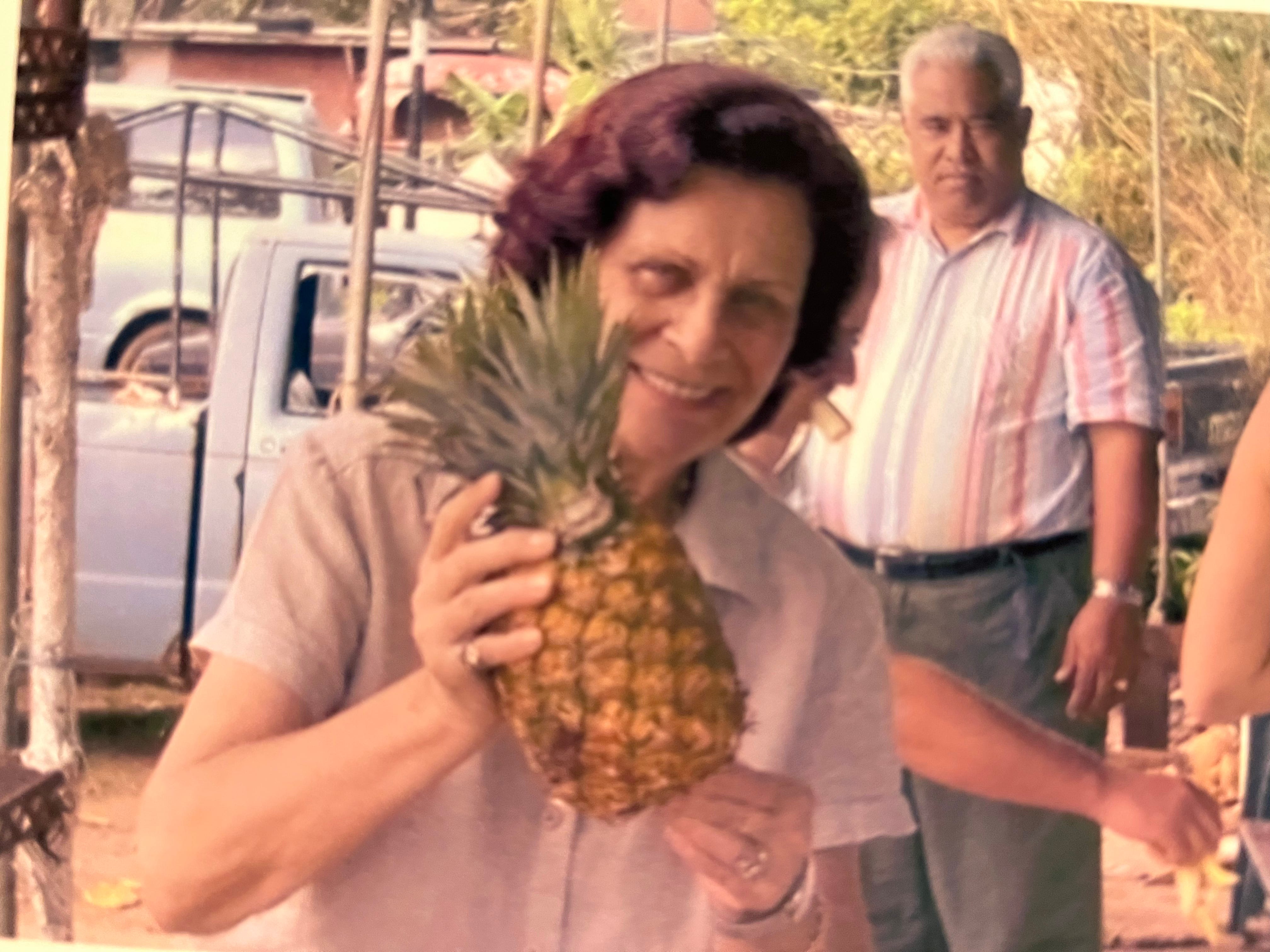
There’s a photograph of Ines that lives in all of us. She’s in her kitchen. Pink striped shirt. Red nail polish. She’s opening a pomelo, beaming at the camera.
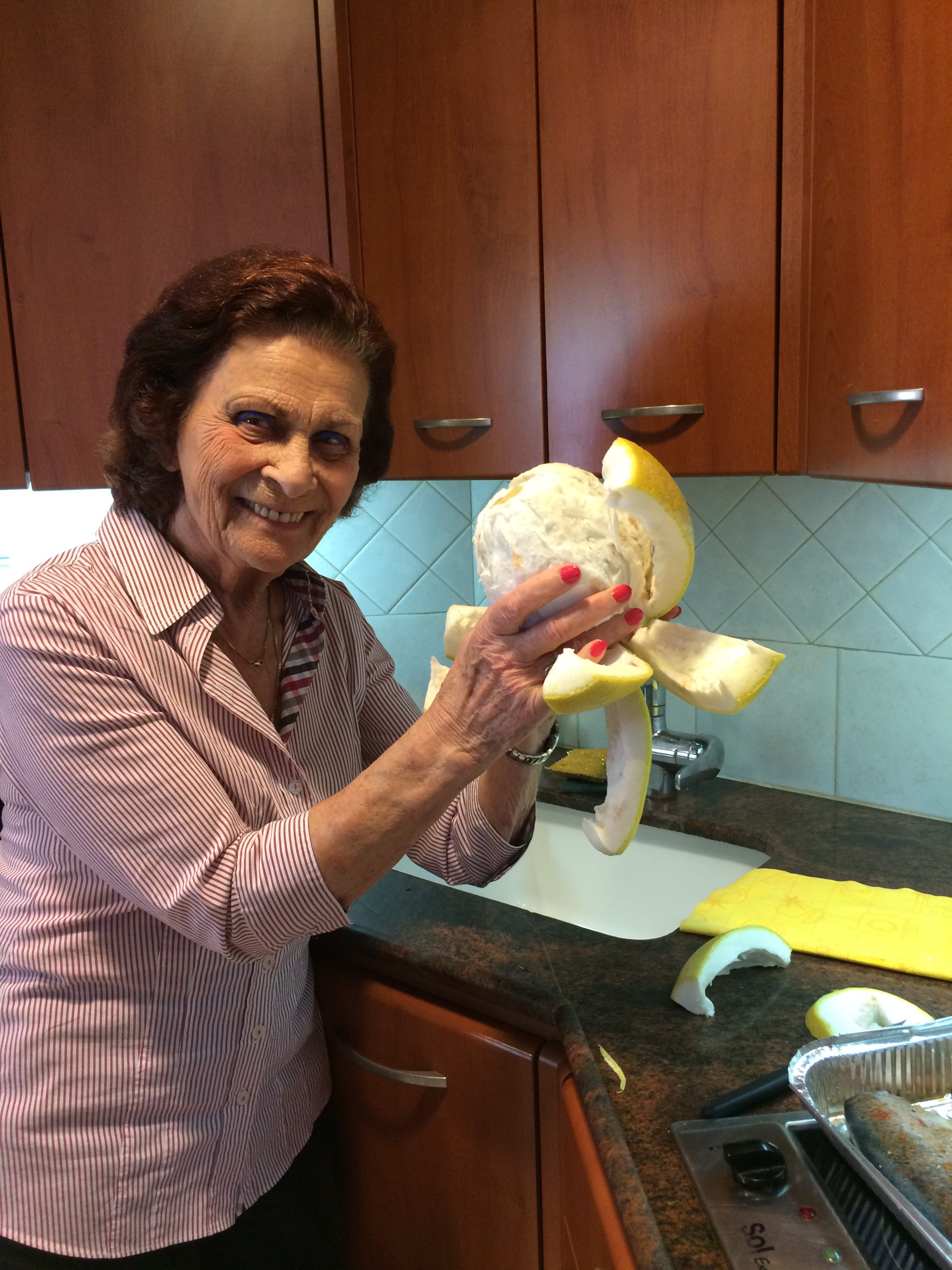
A pomelo takes effort. It’s thick-skinned, slow to come apart, the kind of fruit you open for other people. Near the end of her life, when my mom would set out on hikes along the national trail, Ines would prepare a pomelo for her to take. Peeled already, sectioned, uninjured. Perfect for the trail. That was how she showed her love.
Dried Fruit and Nut Bread
7 Tbsp sugar
7 Tbsp flour + 1 bag baking powder
2 eggs
1 bag vanilla sugar
250 g toasted nuts (walnuts or hazelnuts), chopped
3 1/2 cups dried fruit, chopped
Mix everything together. Bake in a long English tray.
Note from My Mom
The reason why I do not like Savta’s recipes is because she doesn’t say how long to bake, no precise directions.
My mom’s note might be the clearest record of all. Not just what Ines cooked, but what it felt like to inherit her. The recipes were inexact, incomplete, written for someone who already knew. My mom didn’t have that kind of intuition, and she couldn’t stand the way the recipes exposed the gap.
Ines is gone now.
I have the book and a handful of recipes that the family has written down. Recipes written for someone who already knew how to make them.
I’m still learning to understand what she left us.
Cookbook Archive
The entire cookbook archive (in hebrew) is available below:
-Alon